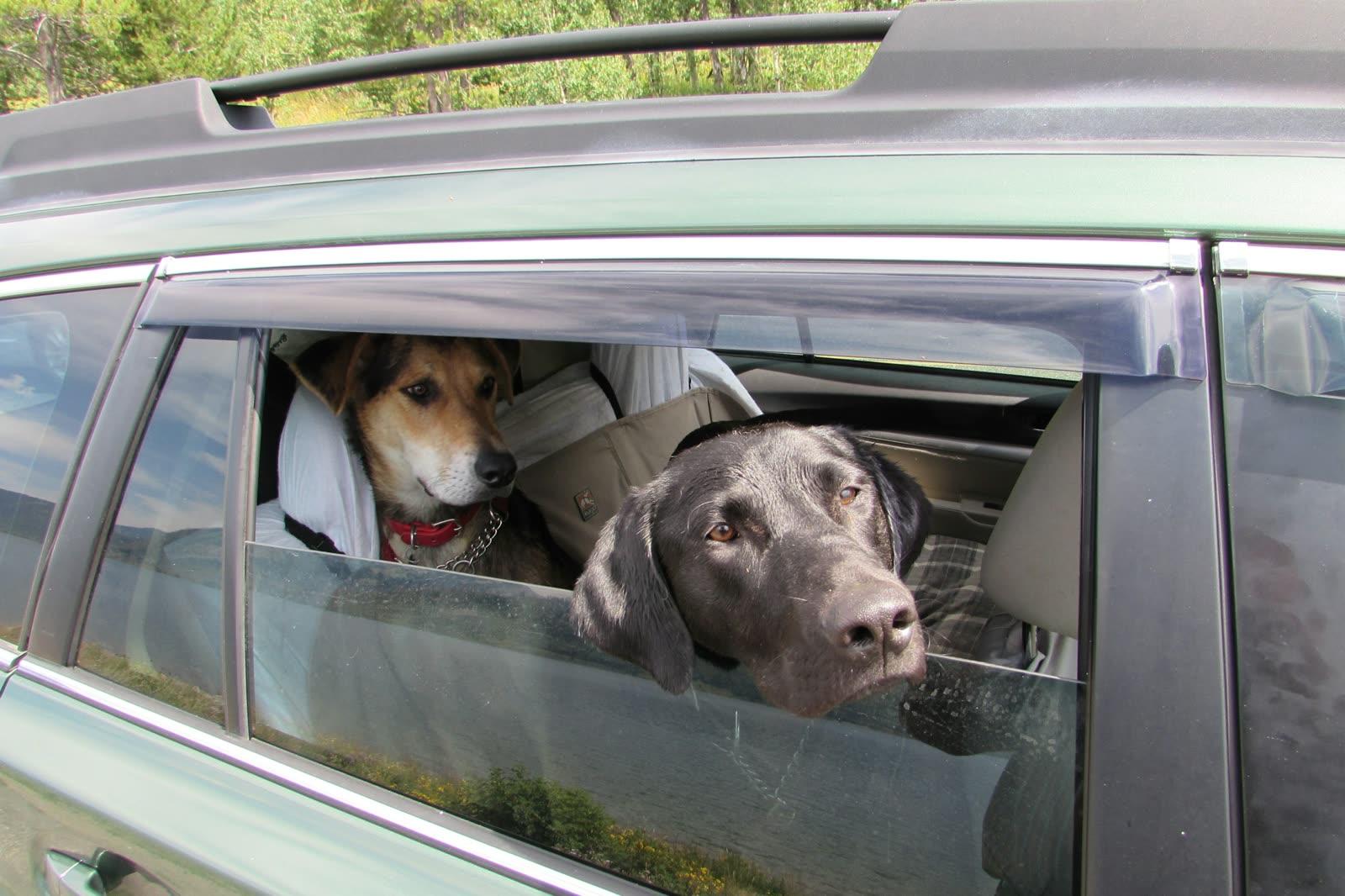
Before you leave
- Do a short practice drive a few days before, so the car, the cover and the routine are familiar.
- Feed a light meal two to three hours before departure rather than right before you leave.
- Pack the dog's usual food and measure portions into bags per day. Changing food on the road is a common cause of an upset stomach.
- Ask your veterinarian about anything health-related for the trip, including motion sickness, medication and vaccination records you may need for hotels or state lines.
Setting up the back seat
A standard hammock cover clips to the front and rear headrests and sags into the footwell, so a dog either braces on the slope or slides down. A hard-bottom extender adds a rigid panel across the footwell and turns the bench plus footwell into one flat platform.
Whatever cover you use, put it on before the dog gets in, tuck the seat-anchor flaps deep into the seat crease, and keep a towel within reach of the driver for the stop where the dog comes back wet.
Water and feeding on the road
- Offer water at every stop rather than leaving an open bowl in the car; open bowls spill on the first corner.
- A bottle with a fold-out trough or a folding bowl means you are not carrying two things in one hand while holding a leash in the other.
- Slow-feed bowls help dogs that gulp when excited, which is most dogs after two hours in a car.
- Feed the main meal at the end of the driving day, not at a rest stop.
Rest stops
- Stop every two to three hours. Leash on before the door opens, every time.
- Walk first, water second, back in the car third.
- Keep waste bags clipped to the leash so you never go looking for one.
- Never leave a dog in a parked car in warm weather, even briefly.
Arriving at a hotel
- Set up the same bowl, the same blanket and the same feeding time as at home; routine matters more than the room.
- Check the hotel's pet policy in writing before booking, including fees and where dogs may be walked.
- Shake out the seat cover and towel the same evening so tomorrow's drive starts clean.
This guide is general advice, not veterinary or safety guidance. Nothing on this site is a restraint or a safety device.