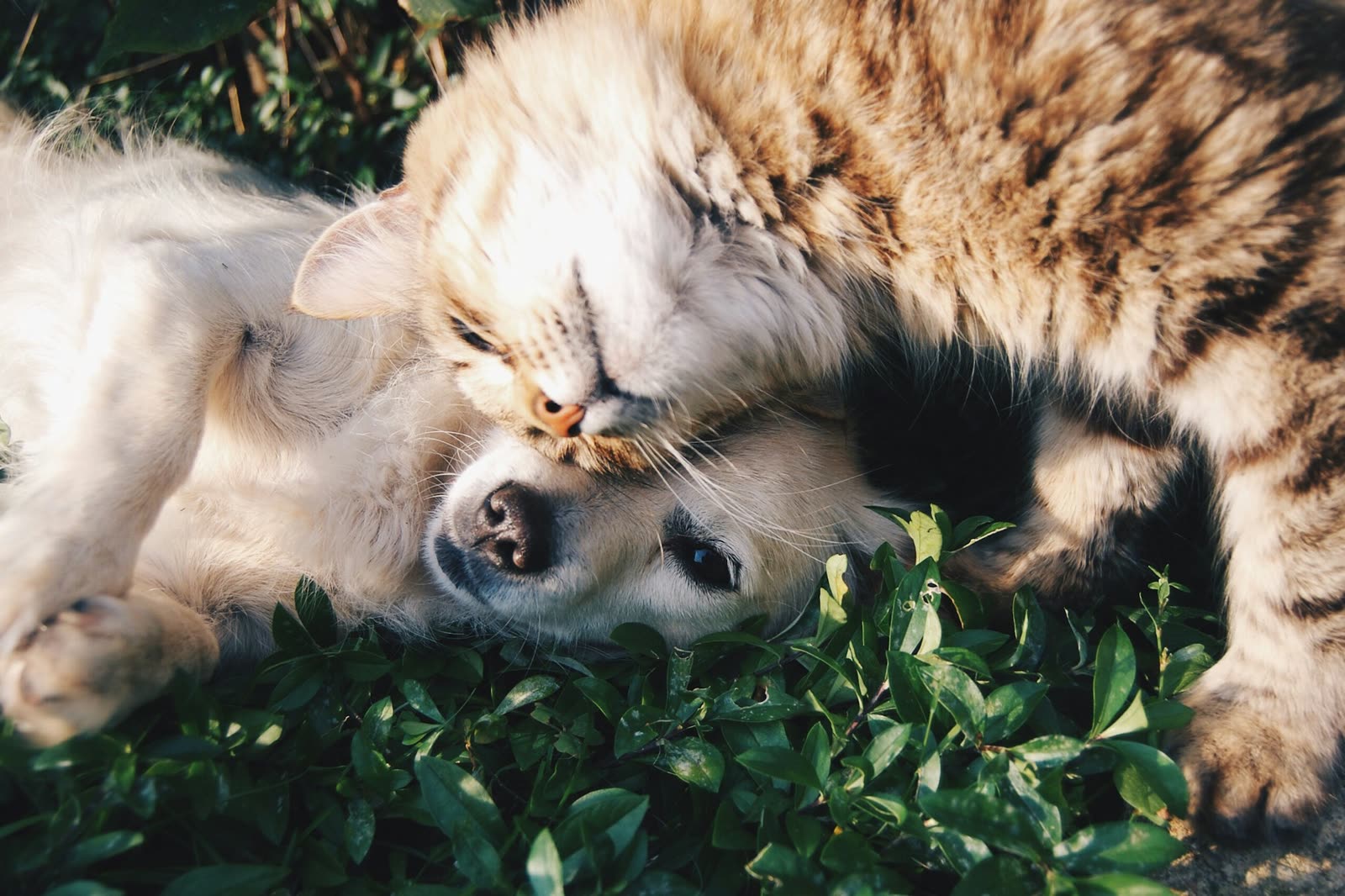
Give each animal a zone
- The cat rides in a carrier secured with the seat belt, ideally on the floor behind a front seat or on the rear bench, with a familiar blanket inside.
- The dog rides on the covered back seat or in the cargo area, with a barrier or crate if the dog is likely to investigate the carrier.
- Keep the carrier where the cat cannot see the dog's face directly; a towel over part of the carrier helps many cats settle.
Water and feeding for two
- Two folding bowls, labelled, so nobody shares. Cats generally will not drink from a bowl a dog has used.
- Offer the cat water inside the carrier at stops rather than opening the door in a car park.
- Feed both at the end of the driving day. Cats in particular often refuse food in transit; that is normal for a day.
- Anything health-related, including sedation or anti-nausea options, is a question for your veterinarian.
Pack once, in one place
- One organizer for the shared kit: bowls, bottle, towel, bags, wipes, a spare collar tag.
- A separate small bag for the cat: litter, a foldable tray, the carrier blanket.
- Paper copies of vaccination records for both animals if you are crossing state lines or staying in hotels.
At the destination
- Set the cat up first in a closed room with litter, water and the carrier left open; let the dog explore the rest of the space.
- Reintroduce them only when the cat comes out of the carrier on its own.
This guide is general advice, not veterinary or safety guidance. Nothing on this site is a restraint or a safety device.